Creating a Budget for the Holidays
The holiday season should be about joy, connection, and celebration. For many of us, it can also be very stressful. With gift exchanges, travel plans, festive meals, and seasonal deals like Black Friday and Cyber Monday, expenses can pile up quickly, forcing you to scramble to cover all those holiday costs!
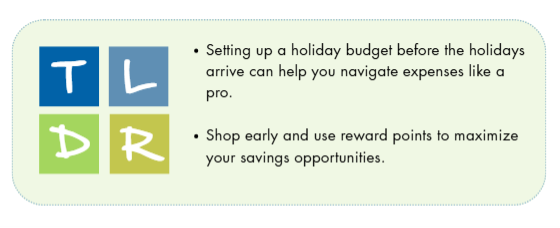
That’s where a holiday budget can come in handy. Smartly made, a holiday budget can be a roadmap for your money, helping you set realistic limits, avoid last-minute splurges, and enjoy the season without worrying about how you’ll pay for it later. Even better, the same steps you use for holiday spending can become part of your monthly budget habits, setting you up for financial success year-round.
H2: Steps to Making a Budget (For the Holidays)
If you’re not sure where to start, read on. We’ll break down the key steps to making a budget for the holidays and beyond!
H3: Step 1: Start with your monthly income and expenses
Before diving into holiday specifics, get a clear picture of your overall finances. Think of this as your foundation; if you skip this step, your holiday budget will be based on guesswork instead of reality.
- Start by writing down your monthly income from all sources: salaries, side hustles, rental properties, or freelance work.
- List your fixed expenses like rent or mortgage, utilities, insurance, and loan payments.
- Then, incorporate variable expenses such as groceries, dining out, and entertainment, which often fluctuate month to month.
- Once everything is on paper, calculate how much is left over after covering the essentials. This tells you how much you can realistically set aside for holiday spending without putting your financial health at risk.
H3: Step 2: Set your holiday spending limits
Well-defined limits keep your budget grounded and prevent emotional purchases that can sneak up when you’re caught up in the holiday spirit. Think of these limits as “spending goals” to prevent you from accidentally spending more than you want.
With that in mind, start by choosing a total amount you’re comfortable spending on everything holiday related. Then, break it down into categories like:
- Gifts for family, friends, coworkers, teachers—anyone you plan to buy for.
- Travel, including gas, flights, hotels, or meals on the road.
- Food and entertainment, like holiday dinners, parties, and outings.
- Décor and extras such as gift wrap, cards, and seasonal decorations.
Having a category breakdown helps you see where your money will go, so you can adjust if needed before overspending in one area. If you find you have little money to spend on bonus categories like décor, consider creative, budget-friendly ideas.
Step 3: Shop early for stress-free spending
One of the simplest ways to reduce stress is to start shopping early. Spread out purchases to avoid the strain of last-minute spending sprees. Early shopping also gives you time to compare prices, hunt for discounts, and take advantage of pre-season sales.
Step 4: Create a gift list and prioritize
Holiday gifts can get expensive fast, especially if you shop without a plan. A gift list helps you stay thoughtful while sticking to your budget.
Write down everyone you want to buy for, along with an approximate cost range. Once you see the total, you may realize some adjustments are needed. This is where prioritization comes in:
- Focus on your closest family and friends first.
- Look for budget-friendly options like homemade gifts or experience-based presents.
- Consider drawing names for group gift exchanges.
Each of these approaches helps to ensure your generosity matches your financial comfort level.
Step 5: Use savings accounts and rewards points
One of the best ways to avoid holiday debt is to prepare in advance, and your bank or credit union can help.
Opening a dedicated savings account for holiday expenses can allow you to set aside money throughout the year. Many people treat it like a “holiday club” account, contributing small amounts each month so they have a lump sum ready when the season arrives.
Also, don’t forget to maximize the savings or financial tools you already have. Many credit cards offer rewards points or cash back that can be redeemed for gift cards or purchases.
Step 6: Plan ahead for next year (and beyond)
Once the holidays are over, don’t pack away your budgeting habits along with the decorations. Take a few minutes to review what worked and what didn’t. Did you spend too much on gifts or travel? Did starting early help you stay on budget?
Use these insights to prepare for next year. Keep what worked, adjust what didn’t, and remember to allow room for flexibility. If the savings account took the pressure off this season, keep that going! If you traveled this year for the holidays, consider staying home next holiday season. There’s always room for compromise and flexibility when you use good budgeting habits!
Make this season joyful, not stressful, with a holiday budget!
The holiday season is meant for connection and celebration. With a thoughtful budget in place, you can focus on what really matters—making memories with family and friends—while keeping your finances on track long after the decorations come down.